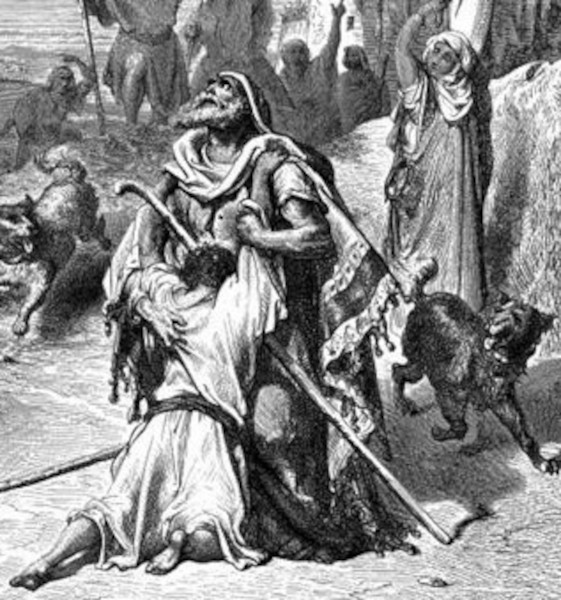
- The Kernel and the Prodigal Son
- Yea, Though I Walk through the Valley of the Shadow of Death…
A selection from Issue 58, (Fifth Month 2020); Link to full issue
Each kernel:
Recently in the night time when sleep had withdrawn from me, I was caused to consider how important death is to life. A statement that at first seems absurd. “Unless a corn of wheat fall into the ground and die it abideth alone.” Who of us, at some time in our lives has felt this alone-ness and perhaps has queried what in the world am I doing here for heavens sake? Who am I and what am I supposed to be doing here? What’s next after this is over? This is a mystery how a kernel of wheat in the ground dies then it germinates and a new life begins—”first the blade then the ear.”
The prodigal son thought he would overcome his alone-ness, so tried living it up only to find in the end he was more alone than ever. In a sense he too had to die before a new life could begin for him. He had to give up. We might liken the condition of “falling into the ground and dying” when we fall on our knees be- fore our Lord and ask Him to come in and take charge. We have heard this concept of the new birth from our youth but how can we know that it really works. The only way to prove it is to enter into a personal experiment. Just as the prodigal when he determined to go to his father’s house and his father met he fell on his neck and kissed him so when our Heavenly Father meets us in the way with His kiss of forgiveness. There will be no doubt whether it works.
How important death is to life. How can these seeming opposites be closely related or one be depend ent on the other?
“Except a corn of wheat fall into the ground and die, it abideth alone but if it die it bringeth forth much fruit.” John 12:24
This is a mystery we cannot know how the kernel of wheat in the ground dies, then germinates and a new life (begins) is begun. “First the blade, then the ear, after that the full corn in the ear.” Mark 4:26.
Have we not all, at some time in our lives, felt this alone-ness, loneliness, lost-ness. For we each have an inner room where none others cannot come unless we allow and there are times when we feel very much alone and have wondered why in the world am I here, who am I and what am I supposed to be doing, and what’s going to happen when this is over? In the story of the prodigal son, we see he tried to overcome his alone-ness by living it up only to find afterwards he was much more alone. In a sense he too had to die be- fore he could experience new life, he had to give up in a decision to go to his father’s house. Each kernel must go into the ground and go through the miraculous trans- formation before there can be new life, growth and fruit produced.
We might liken the activity of falling into the ground and dying to our falling onto our knees before the Lord and asking Him to come in and take charge of our lives. Then we can be born anew (again), experience a new life within us. We will find that our alone-ness has been graciously replaced by His presence and we will find new purpose and direction for our lives. The concept of the new birth is centuries old but to one who has just experienced it, it is anew and fresh as our next breath. How do we prove this concept that has been explained over and over. How except by embarking on a personal experiment, then when we, as the prodigal did, have the Father meet us on the way, fall on our neck and kiss us, we will have no doubt of the validity. We will experience in reality what is meant (expressed) by the words Peace that passeth understanding and joy unspeakable.
Except—it abideth alone.
From the Journal of the late William L. Cope, Recorded Minister Middleton Monthly Meeting sometime during the 1980’s. Submitted by Mary Alice Pino (Middleton, OYM). Illustration by Gustave Dore from “The Dore Bible”
